
What does interconnected mean?
If you have heard the term “interconnected smoke alarms” and aren’t quite sure what it means — you are not alone.
With Queensland smoke alarm laws already in place for rental properties and property sales, and all existing private homes required to comply by 1 January 2027, it is important to understand what “interconnected” means and what it looks like in your property.
At Coast Smoke Alarms, this is one of the most common questions we are asked.
What does “Interconnected” mean?
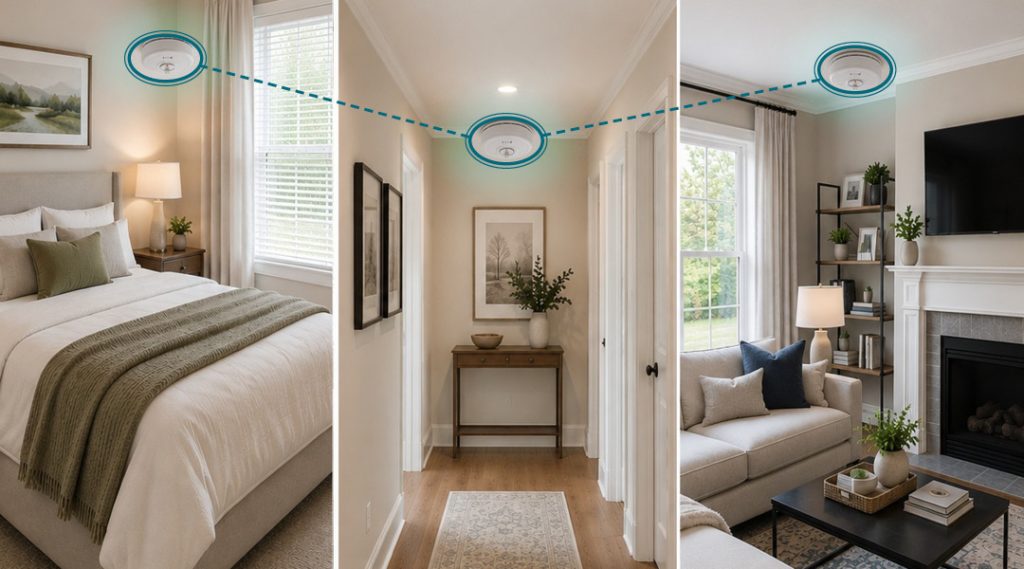
Interconnected smoke alarms are designed to work together as one system.
When one alarm detects smoke, all alarms in the property sound at the same time.
This means that if smoke is detected in one part of the home, the warning is not limited to that area. All interconnected alarms sound together, helping alert everyone quickly, even if they are asleep, behind a closed bedroom door, or in another part of the house.
Put simply: When one goes off, they all go off.
Why interconnection matters
Interconnected smoke alarms are not just a compliance requirement – they are an important safety feature designed to give occupants earlier warning and more time to escape.
Interconnected smoke alarms significantly improve safety by:
- Alerting the whole household when smoke is detected
- Reducing the risk of occupants sleeping through an alarm sounding elsewhere in the home
- Helping overcome the sound reduction caused by closed bedroom doors
- Giving occupants more time to wake, respond and safely evacuate
In a house fire, every second matters. That is why interconnection is a key requirement under Queensland smoke alarm legislation.
How do alarms interconnect?
Interconnection is usually achieved by:
- Hardwired interconnection - where alarms are physically wired together
- Wireless RF interconnection - where alarms communicate with each other using wireless radio frequency technology
- A combination of both - where some alarms may be hardwired and others may interconnect wirelessly as part of the same compliant system
If your property already has hardwired smoke alarms, replacement alarms must be hardwired. This is one reason it is important to have the existing system checked properly before choosing an upgrade option.
- Bringing homes up to current Queensland smoke alarm legislation
- Using compliant, interconnected systems
- Providing upfront pricing with no hidden costs
What does an interconnect system look like?
A compliant interconnected system in Queensland includes:
- Smoke alarms in every bedroom
- Smoke alarms in hallways connecting bedrooms (or between bedrooms and living areas if no hallway)
- At least one alarm on each level of the home
- All alarms interconnected, either wirelessly or hardwired
What happens if you’re not compliant?
Failing to meet smoke alarm legislation can result in:
- Delays in property sales
- Legal risks for landlords
- Possible insurance complications, depending on the policy and circumstances
- Most importantly - reduced safety for occupants
Non-compliant or poorly placed smoke alarms may not provide the early warning a household needs in the event of a fire.
How Coast Smoke Alarms can help
At Coast Smoke Alarms, we take the complexity out of compliance.
We support property owners, landlords, and real estate professionals across South East Queensland with:
- Upgrading to fully interconnected systems
- Ensuring correct placement and compliance
- Recommending reliable alarms suited to QLD conditions
- Providing ongoing maintenance and peace of mind
The bottom line
Interconnected smoke alarms do not work alone. They work together to help protect the entire home.
Now is the time to check whether your property is compliant.
At Coast Smoke Alarms, we work within your budget to install trusted, high-quality smoke alarms.
Let us take the complexity out of compliance.
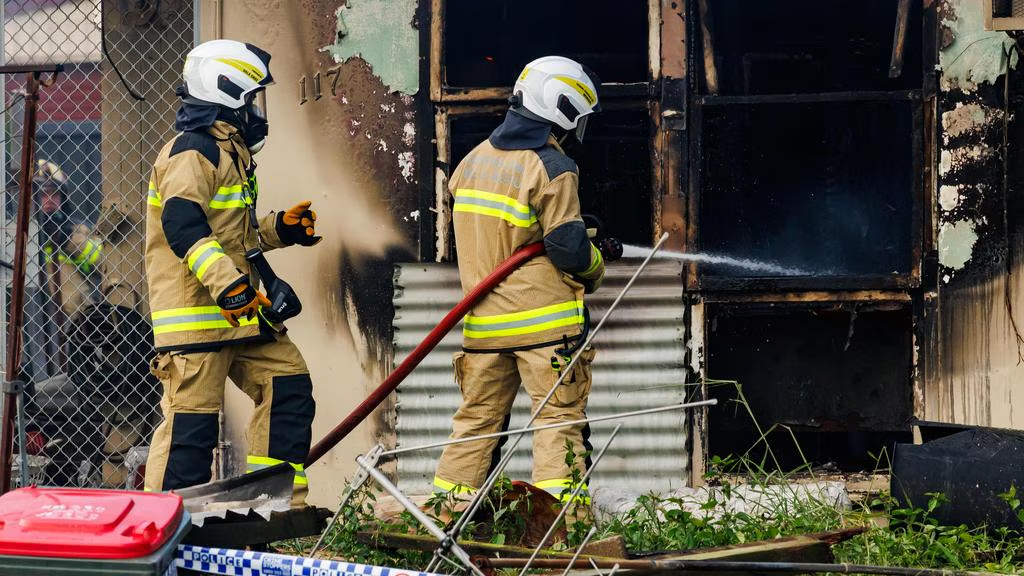
Further Reading: 7 fires a day ...
What’s behind spike in Qld residential blazes
“Just making sure that you all have smoke alarms with the Queensland standard,” Ms Gorman said.